The capacity question is never just one number
An open room does not guarantee an available clinician. An available technician does not guarantee a feasible match. Payer requirements, geography, acuity, qualifications, schedules, and timing all shape the care an organization can actually deliver.
We built a portfolio of decision systems that make those constraints useful. Together, they help leaders see the operating picture and help teams find the next feasible action.
Three perspectives. Better decisions.
Clinician capacity and admissions. A planning engine evaluates referrals against clinical capacity, qualifications, payer feasibility, geography, and lifecycle timing. Recommendations include the reasoning behind the fit, helping teams understand their options.
Technician coverage. Matching and optimization connect open sessions with eligible staff. Conversational workflows bring search, coverage options, and operational follow-through into the channels teams use every day.
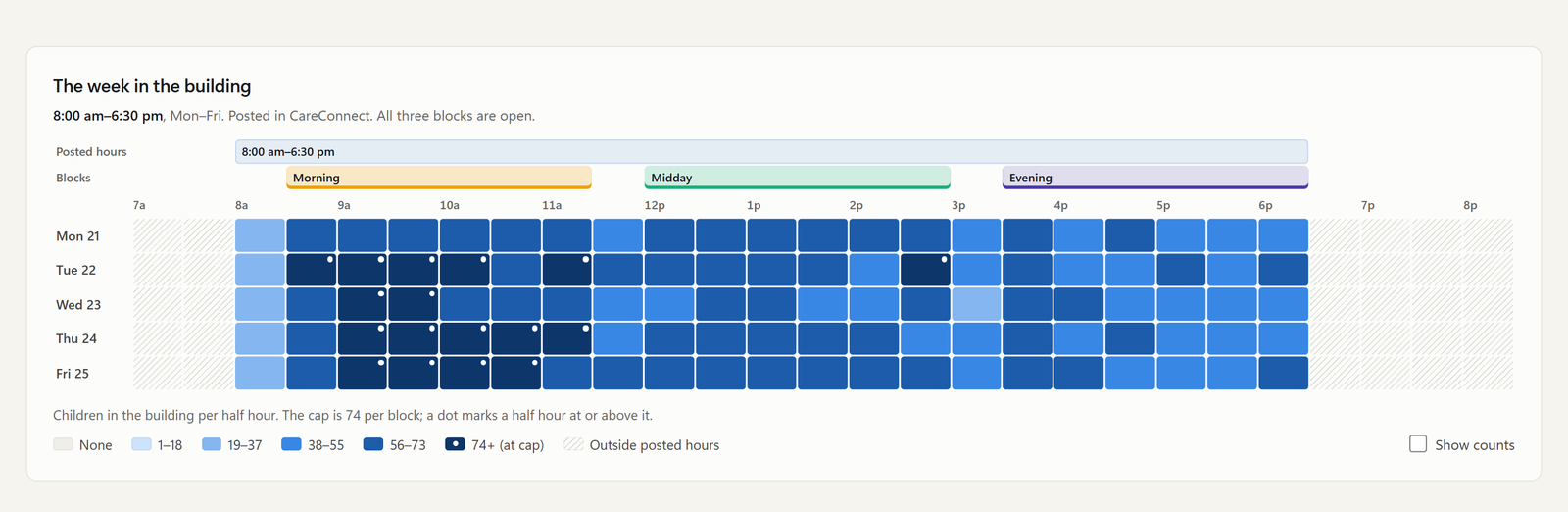
Center growth. A capacity dashboard connects space and operating hours with occupancy, clinician slots, technician coverage, and hiring scenarios. Leaders can explore what growth requires, rather than treating empty seats as ready-to-use capacity.
From analysis to the working day
Daily planning outputs, staff-facing search, and conversational interfaces put decision support close to the work. Explicit constraints and explanations make recommendations inspectable. Teams can see why an option fits, which condition blocks it, and where a different operational choice would change the result.
What this makes possible
- A more actionable picture of service capacity.
- Faster exploration of feasible staffing and admission options.
- Growth planning grounded in workforce and facility realities.
- A shared decision framework across clinical and operating teams.